
Last year at Highways UK, long‑term Re‑flow partner QMS unveiled a new, more sustainable approach to line marking: the new EcoRib™ and ColdMark™ machine.
Headline benefits include improving the long-term performance of profiled edge line marking, while simultaneously cutting whole-life cost, carbon, and ocean microplastics – innovations that may well interest other businesses looking to boost their sustainability credentials.
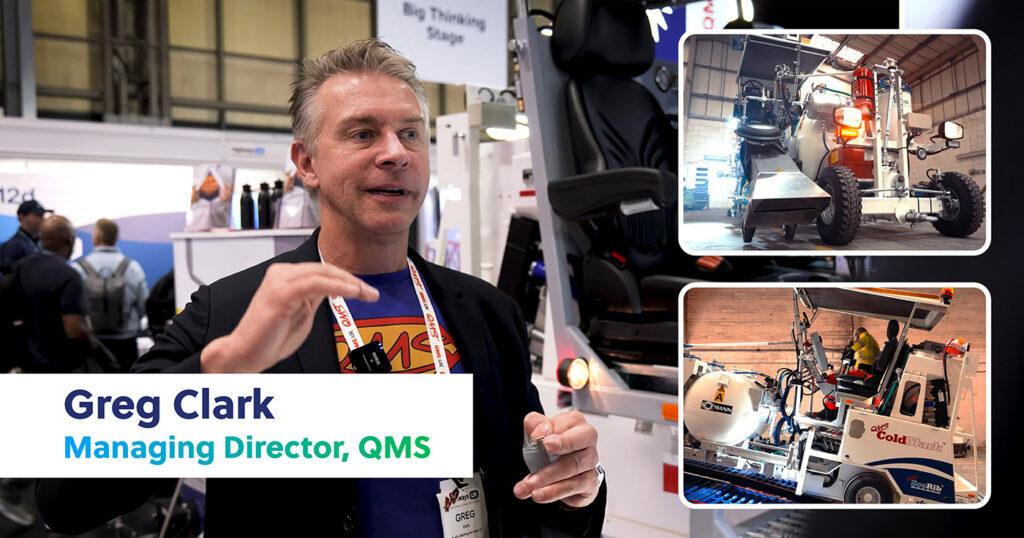
“We’ve taken line marking to a whole new level”
At the show, managing director Greg Clark shared his enthusiasm at the launch of his new machines, and laid out some of the fundamental issues they address.
“As much as 7% of ocean microplastics globally comes from road markings,” Greg said. “Which I think is bonkers, and we need to do something about it.”
To address the issue, QMS teamed up with material supplier Axiom and machine manufacturer Hoffman to develop a system that produces exceptionally hard wearing and high performance line markings.
Of course, existing systems often use thermoplastic, which in hot temperatures and under hot tyres reduces and flattens over time. After two or three years, they need to be resprayed to return its reflexivity where the millicandela value has decreased beyond regulations.
“As a comparison between existing systems like thermoplastic, ours, once it’s put down and set, is exceptionally durable,” Greg explained. “It won’t flatten. It prolongs the life of the product.”
Other benefits
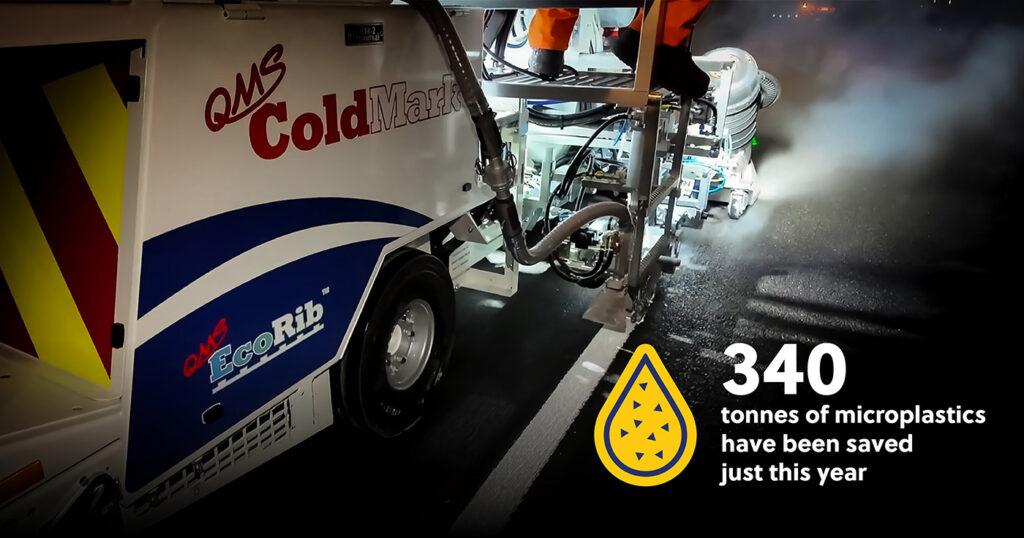
“We’re getting a five-year guarantee and a seven-year life expectancy from our lines,” Greg said. “We’ve reduced the amount of time going back to the same site. We’re saving on traffic management. So we’re saving all those costs. The reduction in microplastics comes from the fact that we’re getting that durability to make it last longer. The line isn’t wearing, reducing in runoff.
“Other cost saving is future based. It’s all about getting that line to last as long as it can. It’s about giving the road user a clear route to travel in the dark, in wet and dry conditions, as well as during the day, and minimising the time our guys are out on the road in dangerous situations painting lines. Do the lines once, and do them right.”
Greg estimates that during projects in 2025, these new machines have reduced ocean microplastics by 340 tonnes. “Plus, we’re just south of the 400-tonne mark this year on reduction of carbon with the line marking system,” Greg said.
Overall, QMS’s passion for changing line marking is a positive story for the modernisation of the sector. It reflects their work with Re-flow too – and our work developing software by innovating directly with clients across highways and civils.
To see what the QMS EcoRib and ColdMark machine looks like – and to hear from Greg Clark himself – watch our latest video.